In response to what I have described as alienation, there are things we can each do: Constructive responses.
I had been thinking about these things for a different reason, trying to focus on things that have guided me through a long career in ministry. This was prompted by celebrating 50 years since my ordination. (That’s a long time and has meant many different things over that time, mostly a deeply rewarding and interesting pathway.)
Now I simply want to identify two things which I think characterise my experience, and I hope my teaching and activity, but have a much wider relevance and impact.
Here today, the first: the idea of Participation. The word basically means being a part of something. I have earlier written about belonging as a ‘habit of life’ and about Paul Tillich’s idea of the courage to be a part, as well as the courage to be apart.
https://www.tobefrank.com.au/habits/belonging-habits-of-life-2/
https://www.tobefrank.com.au/books/the-courage-to-be-a-part/
There are several things which seem to me central to this idea of participation.
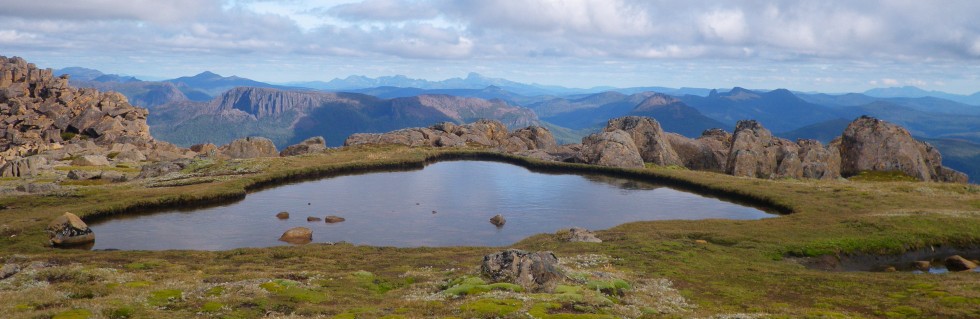
- It means recognising that we are part of something—something that was before us and will be after us. We may feel this, for example, when we stand in a great building, or on a beautiful mountainside. I remember how profoundly I felt it, when I first visited ‘Wave Rock’ in Western Australia. It’s properly Katter Kich in Nyungar language. Participation implies that it is not all about us. We are parts of something more … What that something is (the universe, a life force, a cosmic tragi-comedy, a divine community, and so forth) is for us to discover, perhaps believe in, maybe choose. And as we seek to discover it, we participate in it.
- Participation means responding to what is given—what is given to us as the world in which to live; what is given to us as a community in which we belong; what is given to each of us as a unique personality and potential.
- Participation also means being responsible—taking responsibility for our own lives and actions. Playing our part. In this sense we are responsible to each other, mutually.
These elements lead us to another and perhaps more challenging sense of participation and that is the recognition that we live within a reality far greater than we know, certainly more than we can control or manage. This is the sense of the ancient psalm which observed,
‘When I look at your heavens, the work of your fingers,
the moon and the stars, that you have established,
what are human beings that you are mindful of them,
mortals that you care for him?’ (Psalm 8. 3&4).
One night, when we were teenagers camping out in the bush as boy scouts, a friend of mine looked at the stars above and simply said: ‘This shows us that there just has to be something more than us.’
It’s not that we are diminished by this recognition. Rather we find our place within a mysteriously wonderful reality, living on one tiny planet within the immense panoply of what we call ‘space’.
To acknowledge this dimension of our participation invites us to live with the animals and birds, trees and rivers, mountains and seas, not in control, let alone domination—instead, in mutual care and mutual support. This participation, as theologian Sallie McFague once put it, means ‘knowing our place’.
Another significant sense of the word participation for me is derived from the biblical idea of koinonia, which can be translated as communion or fellowship or community. It means ‘life together’. It’s a dynamic idea: living together.
This word is quite specifically applied by the Apostle Paul to the Christian ritual known as the Eucharist, Holy Communion, or the Mass.
In the First Letter to the Corinthians, the Apostle draws upon this idea quite consistently to explain the nature of the fledgling church: it is a community, a life together. In this community everyone has a part, with something to contribute and also to receive from others.
The mystery of the communion ritual or sacrament is that it both facilitates our participation and yet is only a visible part of a much greater reality. Our ‘communion’ is a participation in a life shared with all others in the Christian community, past, present, and future, and with God. The Spirit of God enables this participation. I think its potential reaches to the whole community of life, the whole creation.
Here again those ideas of a mystery much greater than ourselves apply; nonetheless we are given a part and a place, and along with that a responsibility. We have a place at the table and a responsibility for what we do with and about this wider vision of participation, in all its dimensions and possibilities.
Finally, it seems important to say that this idea of participation is never merely an individual or, as people often express it, a ‘personal’ thing. The word ‘personal’ should always mean much more than a single individual’s life. We are persons in community, participating in the whole of life, in body, mind, and spirit, and as such also with others, and with the whole community of creation.
As such, then, participation is our life, our life ethic, and our spirituality. It’s who we are and how we are.
What this says to me, in our fractious and alienated world, is that we may and must each continue to participate: talk to each other; look at each other; listen to each other; if we can, help each other. Our community is made up of these simple but profound dimensions and possibilities. There are many complex issues to be dealt with, for sure. But none of them will be resolved unless we begin with the rich resources given to us in the potential of life together.