Along with attention, belonging, truth, walking, learning, self-reflection, growing things, remembering, and gratitude, rest is a crucial habit and indeed great gift of life.
It is also a vital discipline, if we understand it well. That may take some time—more than a day!
Here I want quite deliberately to start with the biblical notion of sabbath, which derives from and characterises Jewish traditions in many ways, but is shared also in Christianity (again in many ways).
The word ‘sabbath’ is often linked with ‘day’ or ‘time’. One of the life-giving ‘words’ of God in the Hebrew Bible (known as the ‘Ten Commandments’) is to ‘Remember the Sabbath day, to keep it holy.’ What does a ‘sabbath’ day or time mean?
As is so often the case, religious treatment of this idea has easily focussed on negative things: this is a day for not doing various things. In my childhood, shops, theatres, and restaurants were closed,and there was no sport. Some people did not listen to the radio or tv, and so on. I knew one person who refused to cook on Sunday, and another, a farmer, who would not even allow the bull to attend a cow on heat, on a Sunday!
By contrast, church people were busy. It certainly was not a ‘day of rest’.
I want to offer a much more positive vision of this habit of life, resting. To do that, I want to return to the biblical text in which we first encounter this concept, the creation stories in Genesis 1 and 2. There it is said that on the seventh day, ‘God finished the work that he had done, and he rested on the seventh day from all the work that he had done. So God blessed the seventh day and hallowed it, because on it God rested from all the work that he had done in creation.’ (Gen. 2. 2 & 3)
There is in fact a quite critical relation between creation, work, and rest here.
What does it mean that ‘God finished the work that he had done’. There are two possible meanings here. One is that God stopped all work and then there was rest. Nothing doing: rest is defined by what it is not.
But a slightly different sense is that this rest is something different from ‘work’, but is also a part of God’s creative activity: God ‘finishes’, in the sense of adding a gloss, a beautiful covering, to what had already been created. This second sense is my understanding of sabbath. Before there is any human sabbath, there is this divine sabbath.
My own sense of this Sabbath rest is that on this “day” God observes, in affirmative wonder, drawing together all those earlier affirmations, “it was good”, into exuberant celebration. Jürgen Moltmann explained how this idea applies to human experience: “The celebration of the sabbath leads to an intensified capacity for perceiving the loveliness of everything—food, clothing, the body and the soul—because existence itself is glorious.” (God in creation, page 286).
This idea of divine and human resting is not, then, an absence of meaningful activity, but a different quality and focus in our living, our being. It is about affirming and enjoying, but in ways that do not control or possess. Andrew Blosser, in a fascinating book about sabbath titled The Ethics of Doing Nothing, (Orbis, 2023), distinguishes ideas of work in which we ‘operate’, manipulate, control and possess, and patterns of life, even rituals, in which we intentionally allow things to be. We see, receive, enjoy, and celebrate what is. This is a very positive kind of ‘doing nothing’, which is doing a lot, really creatively.
This habit of life I would like to describe as ‘letting be’. A wonderful Beatles song uses this expression, Let it be. This I think describes the creativity of God, not just at some ‘beginning point’, but in all reality and time. God gives life and possibility to all that is. In so doing, as Moltmann said, God is with and alongside creation. This ‘sabbath rest’ is how God chooses to be with the world (page 279). God’s rest does not mean God does nothing with and for the world, but is does mean that God lets it be. This is creative, permissive, celebratory, and enabling rest.
What, then, is this habit of life?
It is the creative discipline in which we see what is: attending to it. It involves also evaluating reflectively what is given, and considering too what might be—perhaps imagining how things might grow or be enhanced, to develop further the potential in this situation, person, or relationship. To do this, yes it is necessary to desist from some things, but positively to engage in others: to encourage, affirm, learn, and be grateful. Walking might be a very important part of this ‘sabbath’. So too engaging with things that are growing, plants, crafts, things of beauty. Music, arts, and other sources of enjoyment together, all may be part of this habit of life.
In short, this perspective on the traditions of ‘sabbath’ can characterise all of life in a new and fresh way. It can change and heal how we live. That is to say, this is a habit in which to live. It can re-create us. It can give us life.
Many advisors have emphasised the importance of time for sabbath, or sabbath time. I want to say something about place.
Recently I have again been privileged to visit places where there is a profound sense of peace or rest. I first sensed this when I visited Assisi, a busy and crowded city, tourist coaches winding their way through narrow mediaeval streets, so many people enjoying the sheer wonder of the cathedrals and numerous other attractions. But through it all there pervades an extraordinary peace. I found the same on the island of Iona: rugged and wind-swept, an ancient place of worship, and the burial place of Scottish kings over many centuries.
Again, the historic ‘Meskita’, a cathedral which was a mosque for 500 years, in Cordoba, Spain: here I noticed the blackening on the hundreds of marble pillars throughout the building—where hands have touched them, up to shoulder height—and I thought of the millions of people in those centuries since the 8th century, Moslems and Christians, who have brought the realities of life into such a place, seeking peace.
In these places there is a call to rest: to see what Auden once called ‘the long littleness’ of our lives in the perspective of something far greater than ourselves. Beyond the realities of our concerns, sorrows, hopes and fears, there is a reality far greater, and yet to which we belong. We can rest in that.
Visiting several well preserved mediaeval towns in central Europe, Cesky Krumlov in Czechia, and Trnava in Bratislava, there is a similar sense of rest. Here are places where ordinary people lived and worked on projects, often places of worship, begun before their own time and not finished within their life-times.
Here is the sense of time that hold us, rather than time we control. Here is the invitation to know a Spirit of Life, far more than all we own, manage, know or believe. Here is the invitation to celebrate life: to see all that is created and know that it is good.
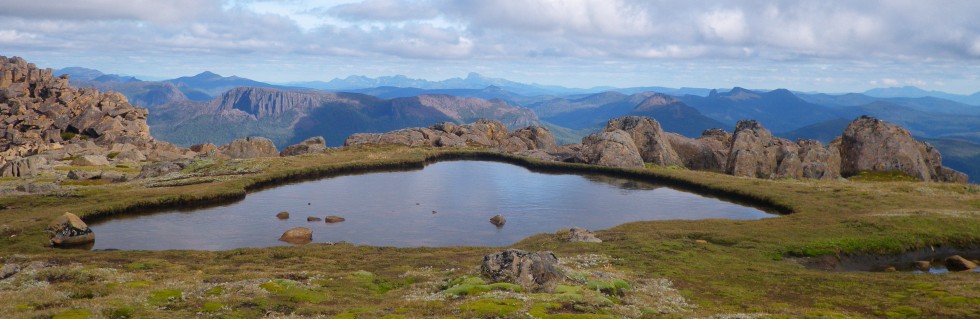
Sabbath space can be found anywhere, not only in exotic places: in the bush, the mountains, the beach, even your own garden, or a corner by the window. Or perhaps a church. The important thing is to find it and live in it, as a habit of life.